RED LIGHT & NEAR INFRARED THERAPY | MANCHESTER
Red Light & Near Infrared Therapy in Manchester
Discover a non-invasive light-based wellness treatment at Healing Hub MCR. Our red and near-infrared light sessions use carefully selected wavelengths as part of a calm, personalised approach to modern wellness and aesthetic care.
15 Minutes
SESSION LENGTH
FROM £20
PER SESSION
RED LIGHT THERAPY EXPLAINED
What is Red Light Therapy?
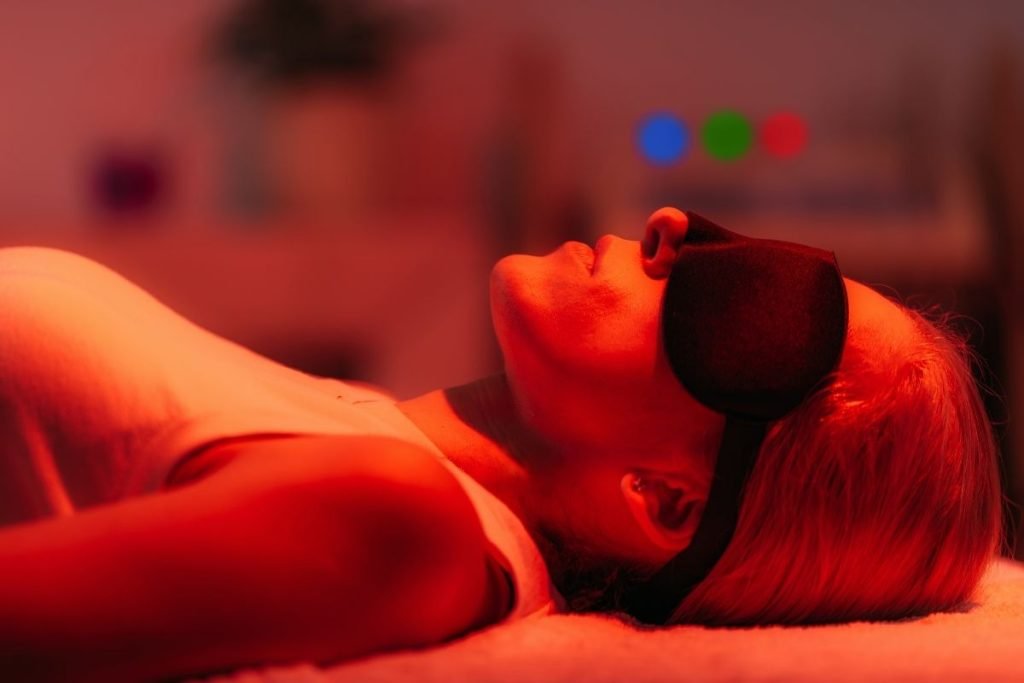
Red light therapy is a form of photobiomodulation, often shortened to PBM.
The treatment uses controlled, low-intensity light delivered at selected red or near-infrared wavelengths.
Unlike ultraviolet light used in tanning, photobiomodulation uses non-ionising light and does not rely on UV exposure.
During your appointment, the selected area is positioned close to an LED or light-therapy device for a set period according to the treatment protocol being used.
Red light therapy is non-invasive and does not involve needles, injections or breaking the skin.
At Healing Hub MCR, red light therapy forms part of our wider approach to modern wellness and aesthetic treatments.
Red Light Therapy vs Near Infrared Light Therapy
Two wavelengths. Different depths. One non-invasive approach to light-based wellness. Red light works closer to the skin’s surface, while near-infrared wavelengths penetrate more deeply into the body’s tissues.
Red Light Therapy
600–700nm · Skin & Surface-Level Support
Red light uses visible wavelengths that primarily reach the more superficial layers of the skin.
Benefits
- Supports healthier-looking skin
- Helps improve the appearance of skin tone and texture
- Supports the skin’s natural collagen processes
- Can complement a skin rejuvenation routine
- Gentle and non-invasive
- No needles or significant downtime
Near-Infrared Therapy
700–1100nm · Deeper Tissue & Recovery Support
Near-infrared light is invisible to the eye and uses longer wavelengths that can penetrate more deeply than visible red light.
Benefits
- Reaches deeper tissues than red light
- Supports muscular recovery and wellbeing
- Suitable for body-focused treatment areas
- Can complement a wider recovery routine
- Gentle and non-invasive
- Can be combined with red light in the same session
benefits of RED LIGHT therapy
Why Explore Red Light Therapy?
01
Non-Invasive
Red light therapy does not involve injections, needles or breaking the skin, making it a straightforward addition to a wider wellness routine.
02
Comfortable Treatment
Sessions involve relaxing near the treatment device while the selected area is exposed to the appropriate light protocol.
03
Red/Near-Infrared Light
Depending on the device used, treatment may incorporate visible red light, near-infrared wavelengths or a combination of both.
04
Easy to Incorporate
Red light therapy can be booked as a standalone appointment or considered alongside other appropriate wellness and aesthetic treatments.
YOUR APPOINTMENT
What Happens During Red Light Therapy?
01
Consultation
Your appointment begins with a brief discussion about why you’re considering red light therapy, your relevant health information and any factors that may affect suitability.
02
Preparation
Your practitioner explains the treatment, which area will be exposed and any preparation required before the session begins.
Depending on the device and treatment area, appropriate eye protection may also be provided.
03
Light Therapy
You will be positioned at the appropriate distance from the treatment device.
The selected area is then exposed to the red and/or near-infrared light for the treatment period specified by the protocol being used.
04
Completion
Once the treatment period is complete, the device is switched off and your practitioner will check that you’re comfortable before the session ends.
RED LIGHT THERAPY FAQS
Frequently Asked Questions About Red Light & Near Infrared Therapy
What is red light therapy?
Red light therapy is a form of photobiomodulation that exposes the body to selected wavelengths of low-intensity red light.
Is red light therapy the same as photobiomodulation?
Photobiomodulation, or PBM, is the broader scientific term for the use of low-intensity visible and near-infrared light to produce biological responses.
Red light therapy is commonly used as a more consumer-friendly term for treatments within this category.
What is near-infrared light therapy?
Near-infrared light therapy uses wavelengths located just beyond the visible red portion of the light spectrum.
Near-infrared light cannot normally be seen by the human eye and can penetrate more deeply into tissue than visible red wavelengths.
What's the difference between red light and infrared light?
Red light is visible to the human eye.
Near-infrared light uses longer wavelengths immediately beyond visible red and therefore cannot normally be seen.
Some photobiomodulation devices use both within the same treatment.
Is red light therapy the same as a sunbed?
No.
Sunbeds primarily expose the skin to ultraviolet radiation.
Photobiomodulation uses different wavelengths within the red and near-infrared spectrum and does not rely on UV light to tan the skin.
Does red light therapy hurt?
Red light therapy is non-invasive and does not involve injections or deliberately damaging the skin.
Most sessions simply involve sitting or lying close to the treatment equipment.
Tell your practitioner immediately if you experience significant discomfort or excessive heat.
Does red light therapy burn the skin?
Photobiomodulation treatments are not intended to burn the skin.
However, light-based equipment still needs to be used according to the manufacturer’s instructions and appropriate exposure parameters.
If something feels excessively hot or uncomfortable during your treatment, tell your practitioner immediately.
Can red light therapy help wrinkles?
Certain red-light devices have been studied for improving the appearance of facial wrinkles.
Whether this claim applies to a particular treatment depends on the specific device, its intended use and the evidence supporting it.
Your practitioner can explain whether Healing Hub’s equipment is being used for an aesthetic skin-treatment protocol.